


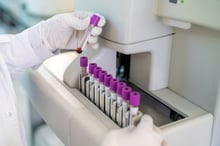
 A novel blood-based test that can help differentiate between schizophrenia and bipolar disorder may soon hit the market, as the Food and Drug Administration (FDA) yesterday granted breakthrough device designation to Laguna Diagnostics' new biomarker assay.
Why It’s Relevant
Current diagnostic methods for schizophrenia and bipolar disorder rely heavily on patient self-reports, long-term observation, and subjective assessments. But these disorders have overlapping symptoms, and research suggests misdiagnosis rates may exceed 50%.
By the Numbers
- In development since 2012, Laguna’s proprietary blood test analyzes mRNA signatures from 18 genes to generate a probability score that a patient has schizophrenia or bipolar disorder.
- In a pivotal study involving 90 adult participants (ages 18 to 45, split equally among those with schizophrenia, bipolar disorder, and healthy controls), the 18-gene panel correctly differentiated the three groups about 86% of the time.
- Following an FDA-requested reanalysis of the pivotal study data using a modified algorithm, Laguna’s test reached an overall accuracy of 98.3%, including a 100% specificity for bipolar disorder (no bipolar false positives).
The Other Side
The test is intended for use with a clinical assessment and is not a standalone diagnostic. Many of the participants in the pivotal trial were taking antipsychotic and mood stabilizer medications at the time of their blood draw, which may have affected some of the mRNA signatures, the researchers noted. Furthermore, the episodic nature of psychiatric disorders might lead to variable results depending on when blood is collected.
What’s Next
The next hurdle will be to see how well the test works in a clinical environment with patients not previously diagnosed and who might have disorders other than bipolar or schizophrenia, Terry W. Osborn, Ph.D., M.B.A., Laguna’s co-founder, CEO, and head of clinical research, told Psychiatric News. The company is now raising funds to mount a study with an estimated 330 symptomatic but undiagnosed individuals. Osborn thinks that the same process and platform could be used to develop an mRNA test to differentiate other diagnostic dilemmas, such as whether a patient has unipolar or bipolar depression.
Takeaway Message
Laguna Diagnostics expects to begin marketing the test while it continues to pursue full FDA clearance, Osborn said.
Related Information
(Image: Getty Images/iStock/alvarez)