


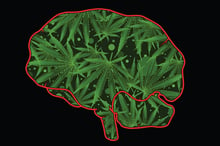
 Psychosis associated with the use of cannabis appears to be a distinct type of first episode psychosis, according to a study in the American Journal of Psychiatry.
Why It’s Relevant
Cannabis is the most widely used drug worldwide, and evidence suggests it may contribute to risk for both short-lived psychotic states and longer-lasting psychotic disorders. However, the literature characterizing cannabis-related psychosis is sparse. The goal of this study was to compare the presentation and hospital course of new-onset psychosis between those exposed and unexposed to cannabis.
By the Numbers
- Researchers prospectively monitored 119 males (ages 18 to 60) hospitalized with new-onset psychosis at the Central Institute of Psychiatry in Ranchi, India. Sixty-six patients had confirmed cannabis exposure and 53 did not.
- At admission, patients with cannabis-associated psychosis (CAP) were younger and had fewer years of education and less history of psychiatric illness than those with non-cannabis-associated psychosis (NCAP).
- Compared with patients with NCAP, those with CAP also had fewer negative psychosis symptoms but greater depression and mania. The two groups also had differing cortical brain activity as assessed via electroencephalography (EEG).
- The CAP group showed significantly greater cognitive improvement after four weeks of inpatient treatment than the NCAP group, with composite scores for the CAP group on the Cognitive State Schizophrenia Battery increasing from -0.26 to 0.04.
The Other Side
The study only included males and the post-discharge sample was small, which limits generalizability and long-term inferences. Plus, it wasn’t possible to determine how illness onset or duration may have contributed to any observed group differences.
Takeaway Message
CAP appears to have a distinct profile based on cognitive performance, mood symptoms, and EEG activity. Because rates of CAP continue to increase, the researchers said that further research is necessary to replicate these findings and determine whether psychosis related to cannabis has a distinct time course, response to existing treatments, and prognosis.
Related Information
Source
Deepak Cyril D’Souza, et. al. “Cognitive, electrophysiological, and behavioral presentation of first-episode psychosis with or without cannabis exposure.” American Journal of Psychiatry. Published June 3, 2026. doi:10.1176/appi.ajp.20250726
(Image: Getty Images/iStock/Dusan Stankovic)