
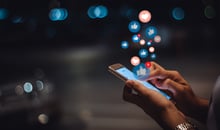
 A new study in JAMA Psychiatry has found that individuals with depression who use social media are motivated to keep posting if they get ‘likes.’ These findings run counter to the theory that people with depression are less sensitive to positive rewards, which leads to symptoms like anhedonia and apathy.
Why It’s Relevant
The in-house rewards of social media—views, likes, shares, and comments—are a central mechanism that keep users engaged with these platforms. These social rewards are also thought to contribute to social media addiction and worsening mental health.
By the Numbers
- Researchers examined the X (Twitter) activity of over 7,500 individuals across three datasets that differed in how depression status was assessed (self-disclosure on Twitter, self-report of depression severity, and self-completion of the Zung Depression Scale, respectively).
- Across all three datasets, individuals with greater depressive symptoms were more positively reinforced by ‘likes’ on average. That is, a higher average likes per post in one day correlated with more posting the following day, and this connection was evident across ages and genders.
- Making use of additional transdiagnostic information available in dataset three, the researchers found that 'likes' exhibited greater positive reinforcement among individuals with an anxious depression subtype.
The Other Side
The calculated influence of positive reinforcement was very small (standardized effect sizes around .01-.02), and there were many individual users for whom ‘likes’ produced negative reinforcement. More broadly, the findings apply only to people who post regularly on social media.
Takeaway Message
“Our findings add nuance to the existing literature, which generally links depression to blunted reinforcement learning,” the researchers wrote. They suggested the positive reinforcement provided by ‘likes’ may relate to interpersonal theories of depression wherein individuals seek out positive feedback, or that social media may be a compensatory source of reward for depressed individuals who aren’t receiving offline rewards.
Related Information
Source
Dan-Mircea Mirea, et al. The reinforcement effect of social media likes in depression. JAMA Psychiatry. Published online July 8, 2026. doi:10.1001/jamapsychiatry.2026.1430
(Image: Getty Images/iStock/Urupong)