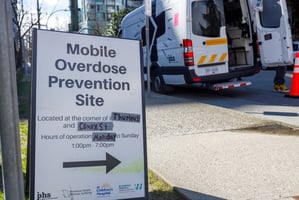


 Neighborhood clean-up interventions, particularly remediating abandoned houses, can lead to reductions in fatal overdoses, according to a study in JAMA Network Open.
Why It’s Relevant
Dilapidated neighborhood conditions, such as abandoned buildings with broken windows and piles of trash on sidewalks, have been linked to increased rates of substance use and overdoses. While previous studies have found that environmental neighborhood interventions such as community trash pickups improve the social cohesion and well-being of residents, the downstream effects on substance use are less understood.
By the Numbers
- Researchers compared opioid overdose rates among 1,667 blocks in the Kensington neighborhood of Philadelphia between 2019 and 2021. During this period, 662 blocks (37%) received a community trash pickup, vacant lot cleanup, and/or abandoned house remediation.
- In aggregate, neighborhood interventions were associated with a 6.6% reduction in fatal opioid overdoses, although there was no change in nonfatal opioid overdoses.
- Individually, abandoned house remediation was associated with a 17.6% decrease in fatal and a 11.5% decrease in nonfatal opioid overdoses. Community trash pickup was not associated with rates of fatal or nonfatal overdoses.
- Vacant lot cleanup was not associated with rates of fatal overdoses but was associated with an 11.7% increase in nonfatal overdoses. This may be because cleanup provided a cleaner space to use illicit substances; more regular maintenance may be necessary to see an impact on substance use.
The Other Side
The study took place in one urban neighborhood and may not be generalizable to suburban or rural neighborhoods. In addition, the neighborhood residents were primarily White and Hispanic or Latin, so the study does not address the increasing rates of fatal and nonfatal overdoses among Black individuals both locally and nationally.
Takeaway Message
“Abandoned house remediation … should be considered alongside other essential treatment and harm reduction interventions for [substance use disorder],” the researchers wrote. “Neighborhood environmental interventions impact a growing list of health and safety outcomes and therefore should be attractive to policymakers and community residents alike seeking to address upstream drivers of health.”
Related Information
“Preventing Substance Use and Overdose Among Young Adults: The Role of Social Determinants of Health”
Source
Eugenia C. South, et al. Neighborhood environmental interventions and opioid overdose rates. JAMA Network Open. Published online July 31, 2026. doi:10.1001/jamanetworkopen.2026.26634
(Image: Getty Images/iStock/DenisTangneyJr)